
Commercial Floor Waxing Montgomery AL
Engineered polymer cross-linking, ASTM D2047 slip compliance, and ultra-high-speed thermal friction restoration for high-traffic commercial corridors.
Ultra-dense pure acrylic polymer wear layer.
Propane & electric thermal friction burnishing.
Certified slip-resistant static coefficient of friction.
The Structural Breakdown of Low-Grade Floor Finishes
Powdery, scratched VCT in high-traffic corridors isn't just an aesthetic failure; it is a structural breakdown of your facility’s primary wear layer. When heavy foot traffic across Atlanta Highway commercial strips drags in abrasive silica, asphalt particulate, and regional red clay, cheap floor finishes literally shatter under the friction. The microscopic zinc cross-links holding low-grade acrylics together shear apart, leaving the porous raw tile exposed to permanent gouging, moisture intrusion, and chemical staining.
Once the protective layer is breached, daily damp mopping only pushes dirty water directly into the raw VCT. To stop this degradation, facility managers must implement professional commercial floor waxing Montgomery AL businesses rely on to build a hardened, impenetrable barrier over their substrates. We do not apply thin, temporary glosses. We engineer a dense, chemical-resistant shell using specialized polymers designed specifically for the heavy mechanical wear of active retail floors and Montgomery corporate spaces.
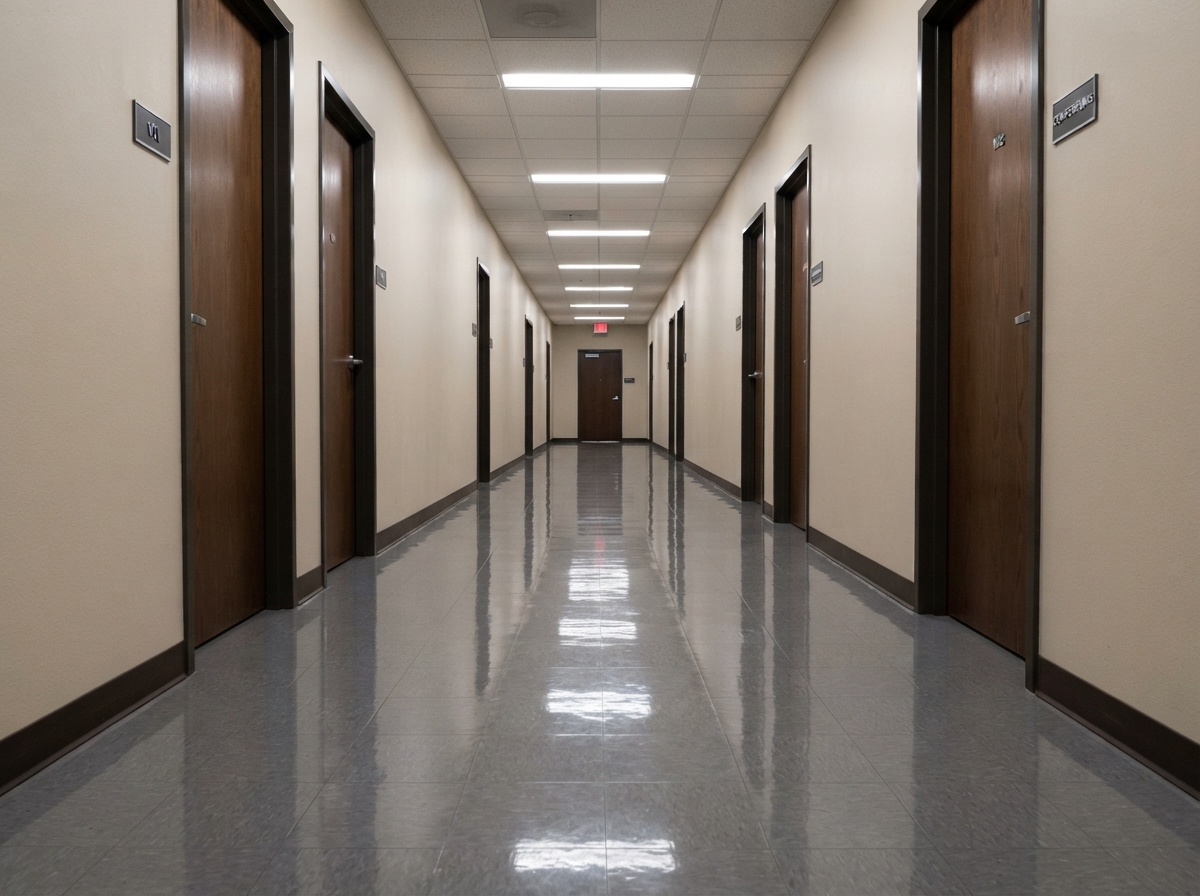
Dense acrylic polymer cross-linking stops moisture intrusion and prevents abrasive soil gouging.
The Science of 20-25% High-Solids Acrylic Polymer Floor Finish
Not all floor waxes are formulated equally. The structural integrity of a finished floor depends entirely on the solids content of the applied chemical. Floor finish is a liquid emulsion—a suspension of polymer resins, synthetic waxes, plasticizers, and leveling agents in a water base. When the water evaporates, the "solids" remain to form the protective shell.
High-Solids Chemistry vs. Standard Janitorial Wax
Standard off-the-shelf commercial waxes typically contain a solids content of 15% to 18%. Because they are mostly water, they leave behind a microscopically thin layer of protection once cured. This requires applying six to eight coats just to achieve a baseline wear layer, and even then, the finish remains susceptible to rapid scuffing.
Our crews deploy 20-25% high-solids acrylic polymer floor finish. By utilizing a denser chemical compound, we lay down a significantly thicker, more impact-resistant wear layer with fewer coats. These advanced polymers are engineered with high-density cross-linking, meaning the molecular bonds are tighter and harder. This chemistry resists the deep penetration of dirt and black heel marks, keeping the particulate matter on the absolute surface where it can be easily removed through routine sweeping and auto-scrubbing.
Achieving the Wet Look Commercial Floor Finish
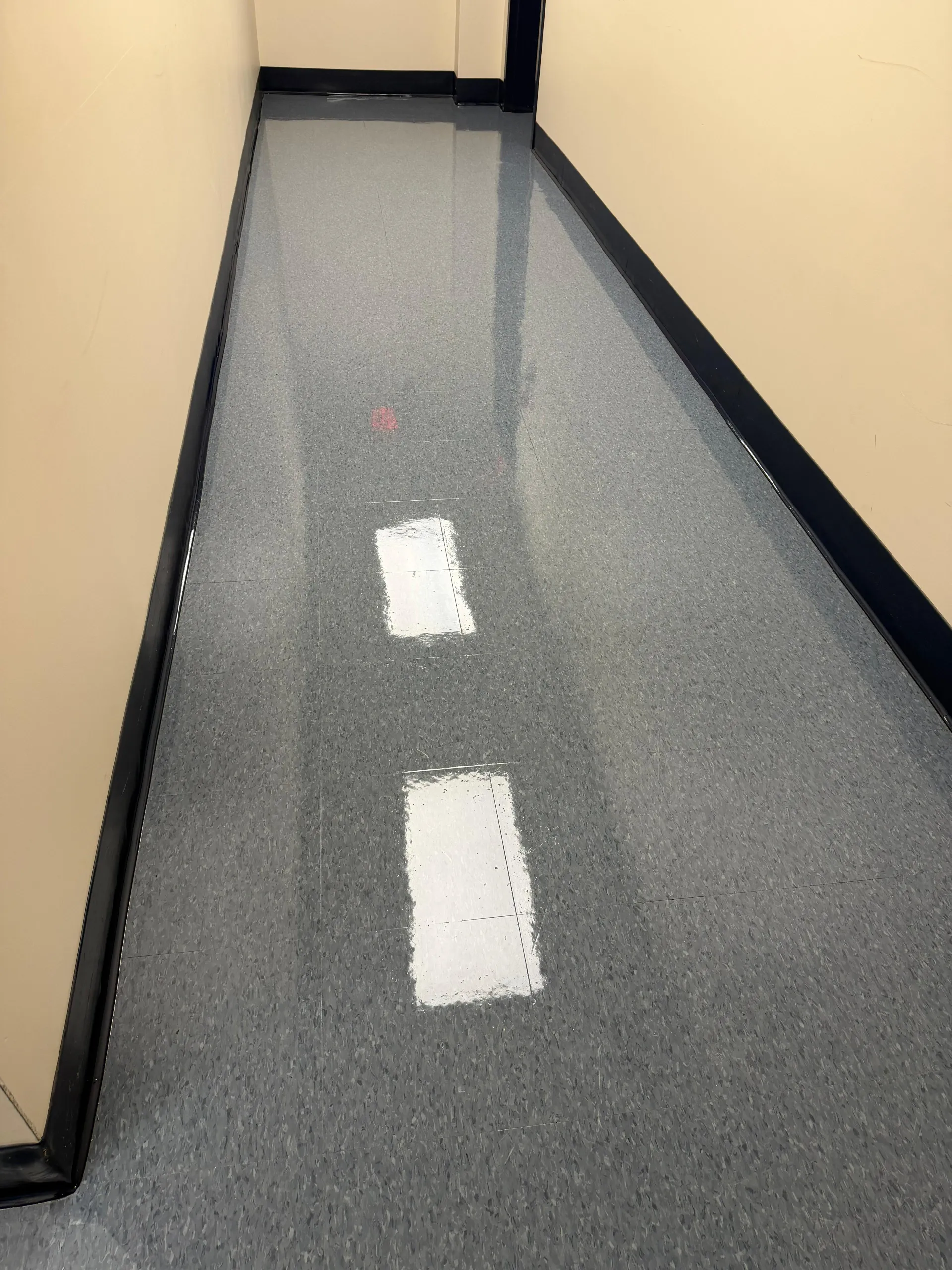
The optical clarity of a floor finish is determined by how flat and uniform the acrylic cures. High-solids finishes contain premium leveling agents that force the liquid polymer to lay perfectly flat before it dries. By eliminating microscopic ridges and valleys in the wax layer, overhead fluorescent lighting reflects directly back at the eye rather than scattering. This precise light refraction creates the deep, glass-like wet look commercial floor finish required for Class-A office buildings, medical lobbies, and high-end retail environments.
Application Workflows for Montgomery Corporate Spaces
Laying down high-solids finish requires strict environmental control and technical precision. Applying premium chemicals with poor technique results in bubbling, streaking, and catastrophic delamination.
Humidity Control and Flash Curing
Alabama’s central climate introduces significant humidity into the curing equation. Floor finish must flash dry at a specific rate for the polymer strands to interlock correctly. If the ambient humidity is too high, the water in the emulsion cannot evaporate, leaving the wax soft and tacky.
We aggressively manage the curing environment in Carmichaels business park offices and local municipal buildings by deploying high-velocity air movers. However, these fans are never pointed directly at wet finish, which would cause the surface to flash dry while the bottom remains liquid—a defect known as "skinning." We establish indirect airflow patterns that rapidly pull moisture out of the room without disrupting the leveling agents in the wax.
Precision Layering Techniques
Our technicians utilize dedicated microfiber flat mops designed specifically for high-solids application. Traditional cotton string mops introduce excessive air bubbles and lint into the liquid acrylic, ruining the optical clarity. We apply the finish in ultra-thin, controlled layers, meticulously cutting in the baseboards before walking the finish down the primary traffic lanes. Every single coat must cure bone-dry to the touch before the subsequent layer is introduced.
High Speed Floor Burnishing (2000 RPM)
Even the hardest acrylic polymer floor finish will eventually accumulate microscopic surface scratches from daily foot traffic. As these micro-abrasions multiply, they diffuse light and dull the floor's reflection. You do not need to strip and re-wax a floor to fix surface scratching; you need thermal friction.
The Physics of Thermal Friction
While standard 175 RPM swing machines are used for stripping and scrubbing, they lack the speed to repair wax. True high speed floor burnishing requires specialized equipment operating at an absolute minimum of 1500 RPM, with our commercial units spinning at a highly aggressive 2000 RPM.
When a natural hair or synthetic blend burnishing pad spins at 2000 RPM against the acrylic finish, it generates intense, localized thermal friction. This rapid heat literally melts the top microscopic layer of the wax. As the machine passes over the heated floor, the pad smooths out the micro-scratches and smears the melted acrylic back into a perfectly flat, glass-like sheet. The polymer instantly hardens as it cools, resetting the floor’s original wet-look gloss without the need to apply new chemicals.
Commercial Floor Buffing Montgomery Maintenance Routines
What many facility managers refer to as commercial floor buffing Montgomery contractors execute is actually this high-speed burnishing process. Integrating a scheduled burnishing routine into your facility maintenance plan drastically extends the lifespan of your initial strip and wax. By continuously melting out the daily scratches and hardening the top layer of the polymer, we keep the dirt from penetrating the base coats, effectively pushing your required strip cycle out by months or even years.
ASTM D2047 Slip Compliance and Liability Mitigation
A common misconception regarding a wet look commercial floor finish is that high gloss equals high slip risk. In commercial environments, slip and fall liability is a massive operational vulnerability.
The high-solids acrylic polymers we deploy are chemically engineered to meet and exceed ASTM D2047 standards for static coefficient of friction (SCOF). The ASTM D2047 benchmark requires a minimum SCOF of 0.5 to be classified as a slip-resistant surface. Our premium finishes cure to a hard, dense shell that, despite its mirror-like visual appearance, provides mechanical grip underfoot.
We ensure that all applied finishes maintain this critical compliance, protecting your facility’s aesthetic standards without exposing your business to the financial risks associated with slick, unsafe walking surfaces.
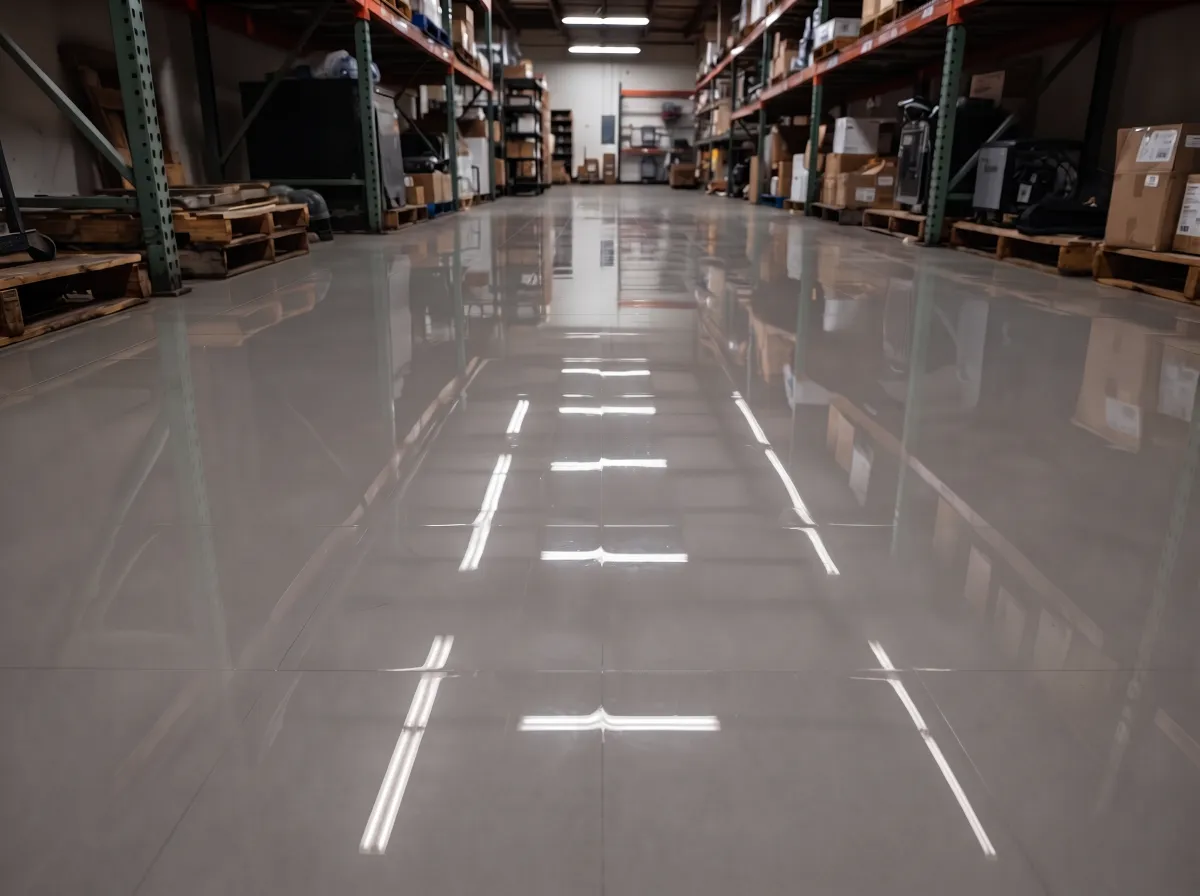
Glass-like optical reflectivity paired with laboratory-tested mechanical traction under wet and dry commercial conditions.
Dispatching for High-Traffic River Region Facilities
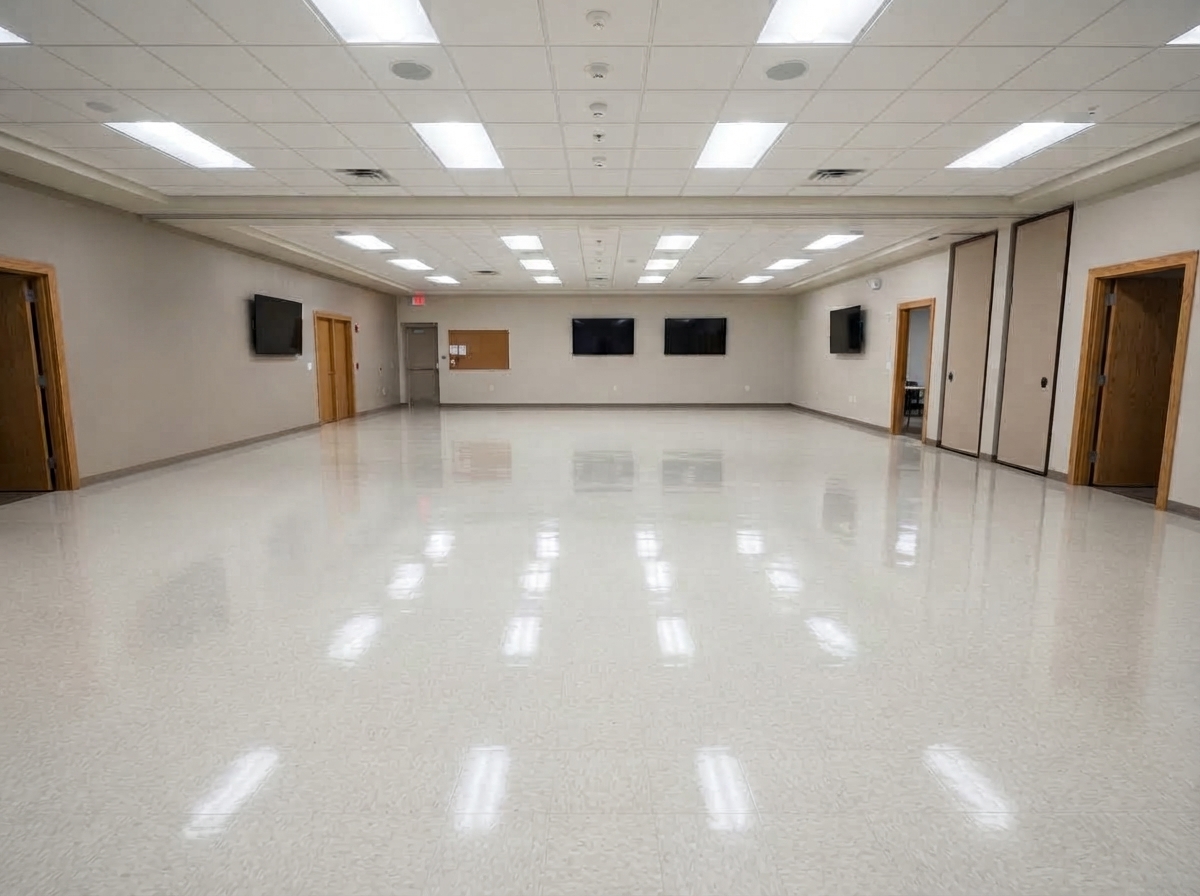
Protecting your facility's flooring requires technical chemistry and heavy mechanical maintenance. From the heavy retail foot traffic of the Eastern Blvd to expansive logistics centers requiring massive square footage coverage, Montgomery Floor Strip and Wax executes aggressive, high-speed restorative care that standard janitorial crews cannot deliver.
Do not let abrasive soil destroy your bare VCT. We provide strategic floor evaluations to determine the exact solids concentration and burnishing schedule required for your specific operational load.
Call (334) 530-5637 for an immediate phone consultation, or submit your facility dimensions through our fast quote form targeting high-traffic River Region facilities.
Schedule 2000 RPM Burnishing
Direct phone dispatch for Montgomery, Prattville, and Wetumpka.
Commercial Waxing & Buffing Estimate
Get high-solids polymer specifications and scheduled burnishing pricing tailored to your facility.